Compliance
TCPA & FCC Compliance: The Complete 2025 AI Calling Rulebook
Navigate the complex world of TCPA and FCC regulations for AI-powered calling. Stay compliant and avoid costly fines with this comprehensive guide.
By James Hill ·
For sources checked September 2026, review the TCPA compliant dialer guide, calling hours and consent checklist, and DNC scrubbing workflow. For product evaluation, compare RizzDial vs Kixie and RizzDial vs Readymode.
The regulatory landscape for AI-powered calling has evolved significantly. With the FCC's expanded enforcement and new state-level regulations, understanding compliance isn't optional. It's essential for survival. This guide provides everything you need to know about legal AI calling in 2025.
Understanding the Regulatory Framework
The Telephone Consumer Protection Act (TCPA)
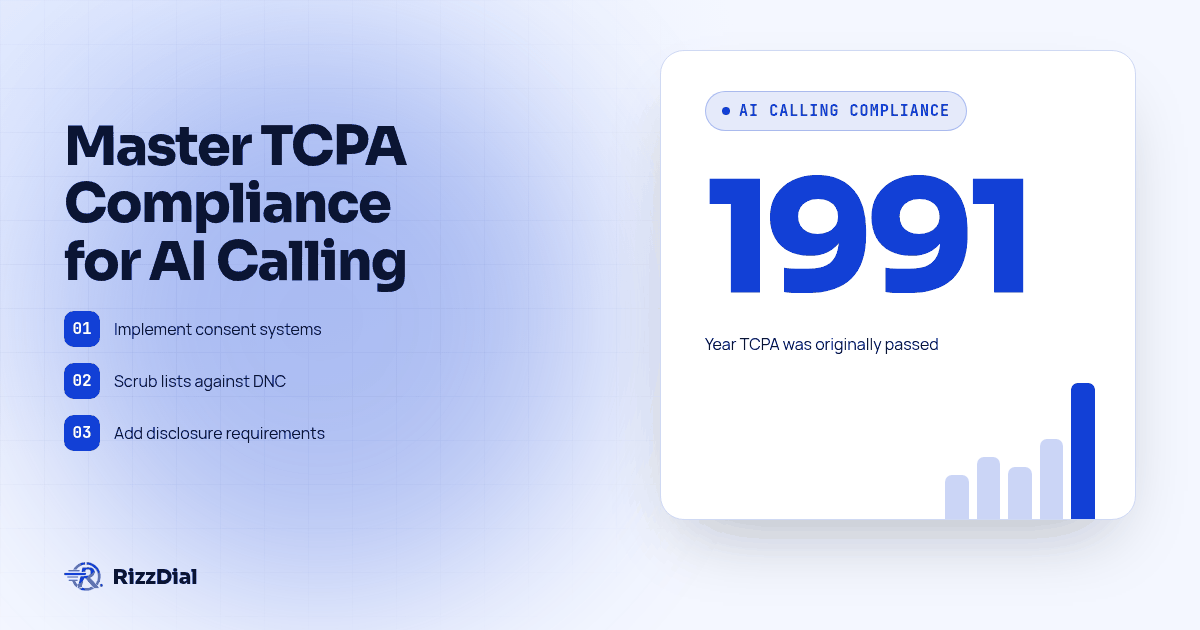
Originally passed in 1991, the TCPA has been repeatedly updated to address new technologies. Key provisions include:
- Prior Express Written Consent: Required for marketing calls to mobile phones
- Opt-Out Requirements: Callers must honor opt-out requests immediately
- Calling Time Restrictions: No calls before 8 AM or after 9 PM (recipient's time zone)
- Do-Not-Call Compliance: Must scrub lists against the National DNC Registry
FCC 2024-2025 Updates
The FCC has issued new guidance specifically addressing AI and automated calling:
- AI Disclosure Requirements: Many states now require disclosure when AI is making the call
- Consent Specificity: Consent must be specific to the type of communication
- One-to-One Consent: Each seller needs separate consent
- Lead Generator Restrictions: Stricter rules on purchasing lead lists
State-by-State Variations
AI calling regulations vary significantly by state:
California
- Extra disclosure requirements under CCPA
- Specific consent language mandated
- Right to know if speaking with AI
Florida
- 24-hour revocation period for consent
- Additional registration requirements
- Stricter penalties for violations
New York
- Enhanced disclosure requirements
- State-specific DNC registration
- Additional consent documentation
Texas
- Written consent required for certain call types
- State attorney general enforcement active
- Additional business registration requirements
AI-Specific Compliance Considerations
Disclosure Requirements
When your AI voice agent makes a call, you may need to disclose:
- That the call is made using artificial intelligence
- That the call is being recorded
- The purpose of the call
- How to opt out
Consent Documentation
Maintain records of:
- When consent was obtained
- What the consumer consented to
- The exact language of consent
- Any revocations or updates
Call Recording Compliance
Different states have different rules:
- One-Party States: Only one party needs to consent to recording
- Two-Party States: All parties must consent (California, Florida, etc.)
- Federal Default: One-party consent for interstate calls
Building a Compliance Program
Step 1: Consent Management
Implement robust systems for:
- Capturing consent with timestamps
- Storing consent documentation
- Tracking consent revocations
- Maintaining audit trails
Step 2: List Hygiene
Before every calling campaign:
- Scrub against National DNC Registry
- Check state-specific DNC lists
- Remove internal opt-outs
- Verify consent validity
Step 3: Script Compliance
Ensure all AI scripts include:
- Required disclosures
- Opt-out instructions
- Company identification
- Purpose of call
Step 4: Monitoring and Auditing
Regular compliance audits should review:
- Random call samples
- Consent documentation
- Opt-out processing
- Time-of-day compliance
Penalties for Non-Compliance
The cost of violations can be severe:
TCPA Violations
- $500 per violation (negligent)
- $1,500 per violation (willful)
- Class action exposure for pattern violations
FCC Enforcement
- Fines up to $16,000 per violation
- Pattern violations can result in millions in penalties
- Criminal referrals in extreme cases
Private Litigation
- Class action lawsuits are common
- Plaintiffs' attorneys actively seek TCPA cases
- Settlements often reach 7-8 figures
How RizzDial Ensures Compliance
Built-In Safeguards
- Contact-level do-not-call flags honored before every call
- Time-of-day enforcement by time zone
- Consent verification before dialing
- Required disclosure integration
Documentation
- Complete call recording with consent
- Audit trails for all calls
- Consent management dashboard
- Compliance reporting
Updates
- Automatic updates for regulatory changes
- State-specific rule implementation
- Proactive compliance guidance
Recommended Practices for 2025
1. Over-Disclose
When in doubt, disclose more. The cost of extra disclosure is zero; the cost of under-disclosure can be millions.
2. Document Everything
If it's not documented, it didn't happen. Maintain records of all consent, calls, and compliance activities.
3. Train Your Team
Everyone touching outbound calling should understand basic compliance requirements.
4. Use Compliant Technology
Choose platforms with compliance built in, not bolted on. RizzDial's compliance features are integrated into every call.
5. Stay Informed
Regulations change constantly. Subscribe to FCC updates and work with compliance counsel.
The Competitive Advantage of Compliance
Companies that take compliance seriously enjoy:
- Lower legal risk and liability
- Better consumer trust
- More sustainable growth
- Competitive differentiation
Those cutting corners on compliance are one lawsuit away from disaster.
Conclusion
AI calling offers tremendous business advantages, but only when done compliantly. The regulatory framework continues to evolve, and staying current is essential.
The safest approach is partnering with platforms that prioritize compliance. RizzDial's enterprise-grade compliance features protect your business while maximizing your outbound calling effectiveness.
Questions about AI calling compliance? Contact our team for guidance on your specific situation.
For the next step in this workflow, review the calling consent and tcpa review guide and discuss implementation through the calling workflow integrations.
About RizzDial
RizzDial is the AI outbound sales workspace for teams on GoHighLevel. Power dialing, AI voice agents, SMS automation, and CRM workflows in one platform. Book a demo.